
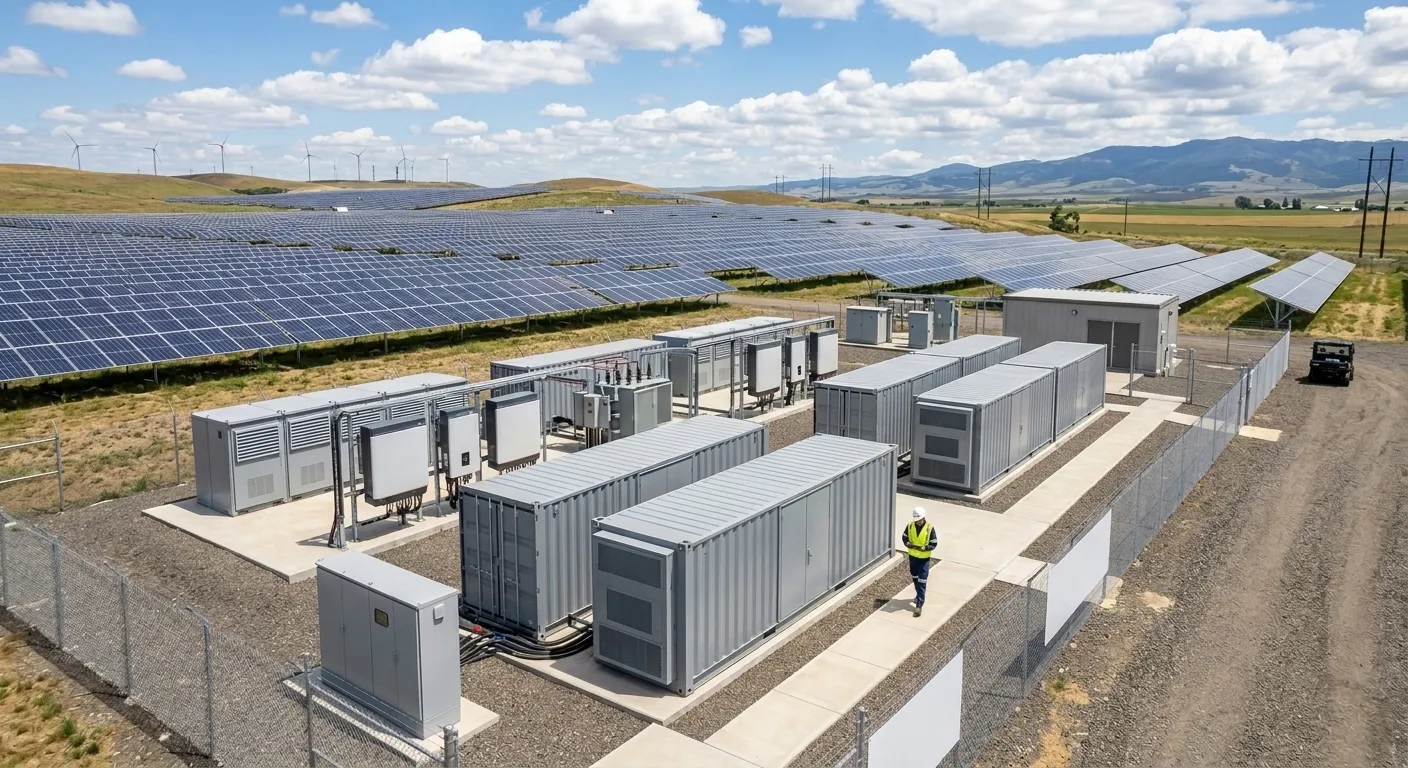
As AI and cloud computing drive explosive growth in energy demand, Texas data centers face a unique trifecta of challenges: volatile electricity costs, the need for 99.999% availability, and rigorous ESG mandates. Given Texas’s extreme weather risks and the opportunities within the independent ERCOT market, a single solar array is no longer sufficient. The optimal solution is a tripartite architecture: Onsite Solar + Battery Energy Storage (BESS) + Virtual Power Purchase Agreements (VPPA).
1. The Texas Market Advantage
Texas offers the most favorable conditions for solar development in the U.S.:
- Irradiance: West, Central, and South Texas rank among the highest in the nation for solar irradiance, ensuring lower Levelized Cost of Energy (LCOE).
- ERCOT Market Volatility: Real-time prices can surge from $20/MWh to over $1,000/MWh during peak summer demand, creating massive financial upside for energy arbitrage and demand response.
- Federal Tax Incentives: Under the Inflation Reduction Act (IRA), projects can achieve up to 50% total investment tax credit (ITC) by stacking the 30% base rate with Domestic Content and Energy Community bonuses.
2. Technical Infrastructure Design
Since rooftop space in data centers is often occupied by cooling infrastructure (Chillers/CRAC), a hybrid approach is recommended:
- Onsite Infrastructure: Combine solar carports and ground-mount stations to maximize footprint efficiency.
- Advanced PV Modules: Utilize N-type HJT (Heterojunction) bifacial modules. HJT’s low temperature coefficient (approx. -0.26%/℃) ensures superior performance during Texas summers, while bifacial technology leverages ground reflectivity (albedo) to boost yield by 8%–12%.
- Smart Control: Deploy 250kW string inverters with intelligent optimizers for panel-level MPPT control, which mitigates shading losses from cooling towers and power lines.
- Tracking Systems: Single-axis trackers are essential in Texas, increasing annual yield by 20%–25% compared to fixed-tilt systems.
- Extreme Weather Resilience: All components must meet FM Global 4478 standards for hail impact and ASCE 7-22 wind load standards (140mph+) to survive regional hurricane and severe storm events.
3. Energy Resilience via Industrial Storage
Storage is not just for backup; it is a financial instrument.
- System Configuration: Liquid-cooled LFP (Lithium Iron Phosphate) systems (e.g., 5MW/20MWh for a 4-hour duration) are recommended.
- 4CP Mitigation: The most significant cost-saving opportunity in Texas is the 4CP (4 Coincident Peaks) program. By using AI-driven Energy Management Systems (EMS) to discharge BESS during the four monthly peak-load hours set by ERCOT, data centers can reduce transmission fees by 30%–40%.
- Safety Compliance: All BESS must be UL9540A certified with integrated thermal runaway monitoring and fire suppression systems to satisfy data center insurance audits.
4. Bridging the Green Gap with VPPA
Onsite solar typically covers only 5%–15% of a massive data center’s load. To achieve 100% renewable energy goals:
- VPPA Mechanism: Enterprises sign 12–15 year VPPAs with large-scale wind or solar farms in West Texas.
- Financial Hedging: VPPAs lock in long-term green electricity prices, insulating the data center from market price shocks while providing Renewable Energy Certificates (RECs) necessary for Scope 2 emission reporting and RE100 compliance.
5. Financial Optimization Framework
- Tax Strategy: Projects benefit from 5-year MACRS accelerated depreciation, which optimizes cash flow and lowers effective tax liability while converting operational expenses (electricity) into depreciable capital assets.
- Implementation Timeline: A typical project, from ERCOT grid studies to final commissioning, takes 9 to 13 months.
Conclusion
Building a resilient Texas data center requires moving beyond simple PV deployment. By combining onsite solar for localized cost reduction, BESS for ERCOT price arbitrage and 4CP optimization, and VPPAs for large-scale carbon neutrality, operators can achieve a sophisticated energy architecture. This tripartite strategy not only mitigates the risks of the Texas grid but also transforms energy from a volatile operational expense into a predictable, high-performance strategic asset.