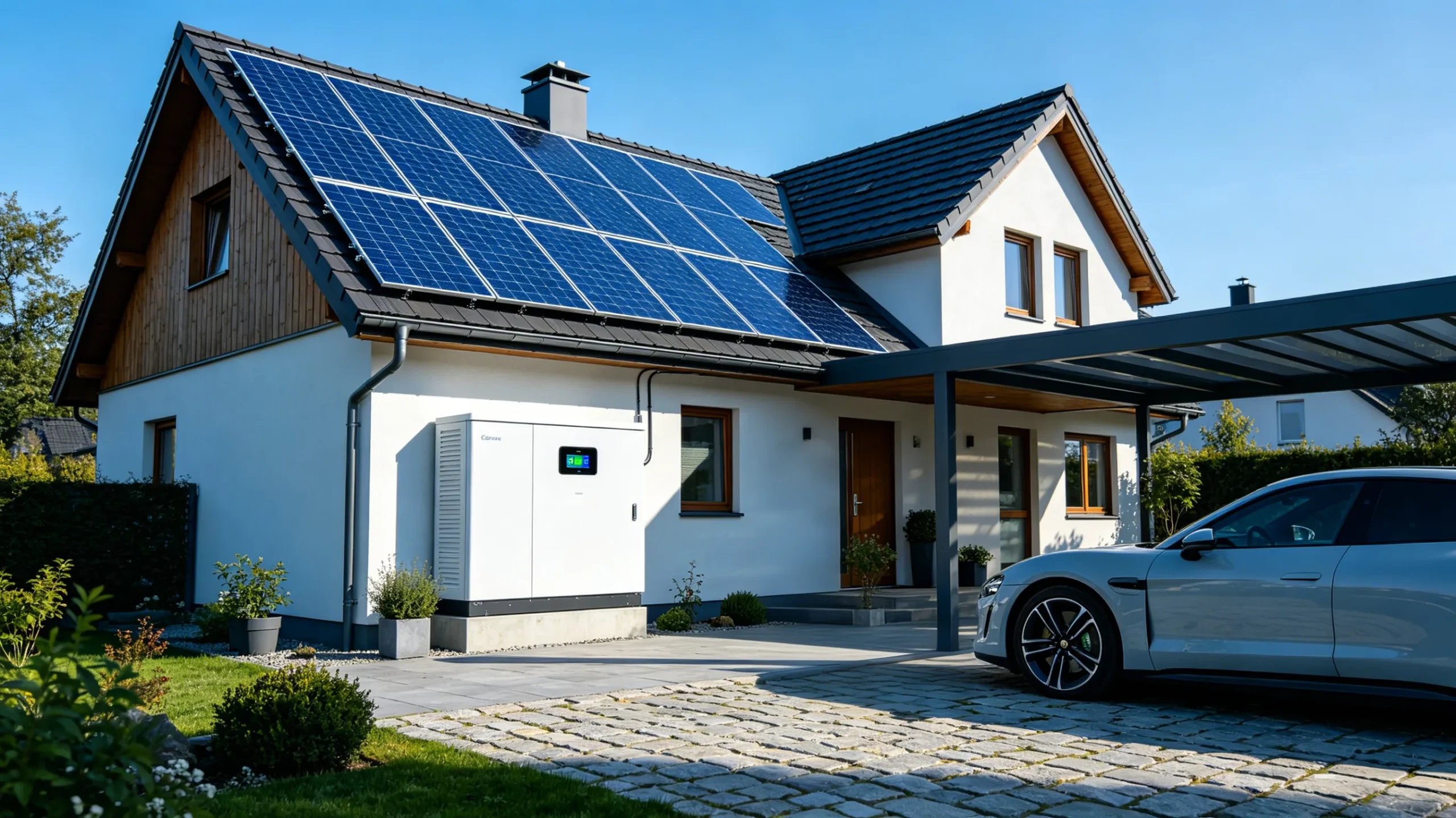
The Linqi Valley project provides a resilient energy solution for a 320㎡ three-story villa located in a remote mountainous region. Given the >1.5 km distance to the public grid and frequent weather-related outages, this project replaces traditional grid reliance with an autonomous microgrid architecture.
1. System Architecture and Hardware Selection
The system is designed for high reliability, prioritizing “zero-tolerance” for power outages.
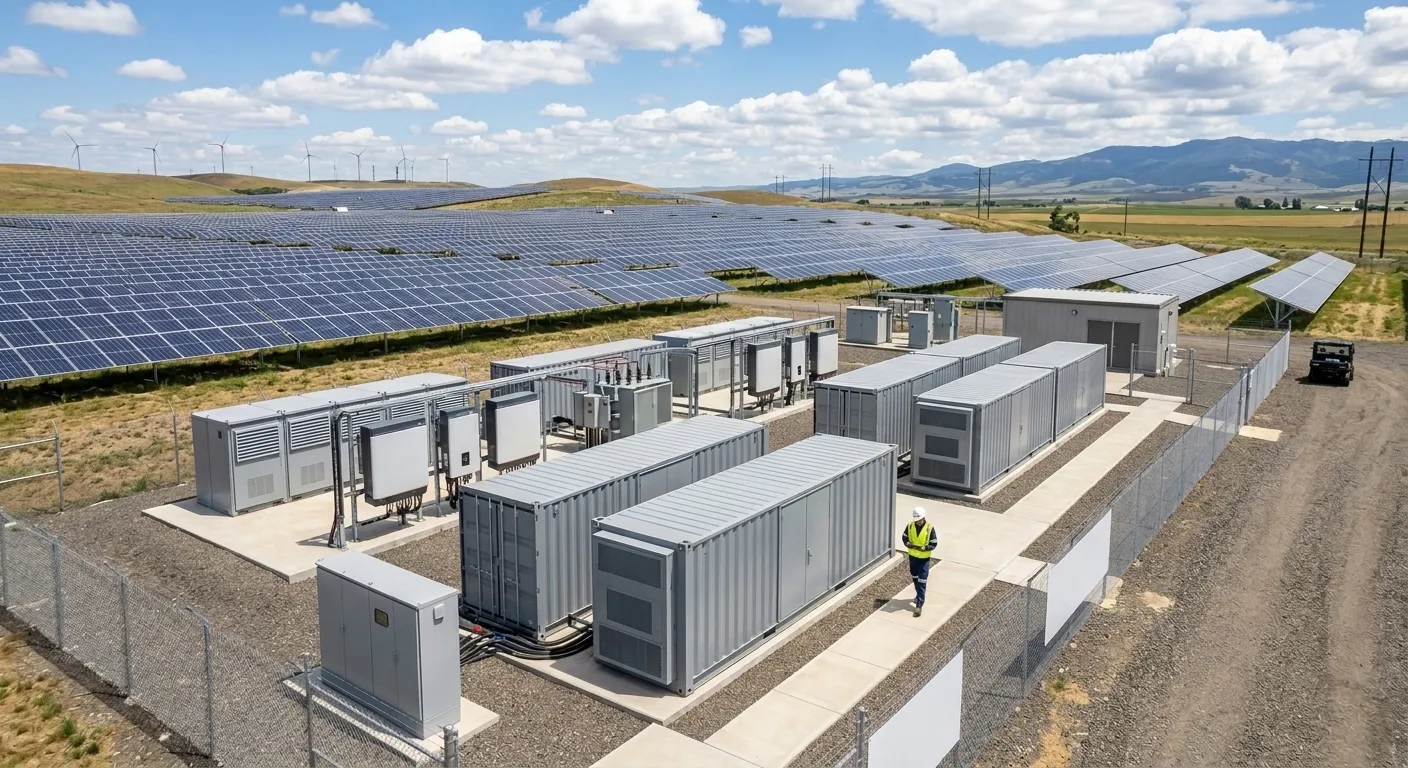
- Solar Array: 10.4 kWp total capacity, utilizing 16 units of 650W N-type bifacial monocrystalline modules. Installed on a 30° south-facing roof, the system generates an average of 45 kWh daily.
- Battery Energy Storage (BESS): A 30 kWh LFP (Lithium Iron Phosphate) battery wall, configured in a 48V system. This storage capacity is sufficient to support basic household loads for 2–3 days during rain or low-light conditions.
- Hybrid Inverter: A 10 kW smart dual-mode inverter featuring dual MPPT and millisecond-level switching, capable of both off-grid “island” operation and integration with a backup generator.
- Emergency Backup: An 8 kW silent diesel generator provides the final layer of redundancy, ensuring the system avoids deep discharge during prolonged adverse weather.
2. Intelligent Energy Scheduling
The system utilizes an automated energy management strategy to maximize self-consumption:
- Daytime (09:00-15:00): Solar energy prioritizes heavy loads (AC, water pumps) and charges both the battery and EV.
- Evening (17:00-21:00): Battery power supports full domestic loads.
- Nighttime (22:00-06:00): Low-power mode sustains essential systems like refrigeration and security.
- Extreme Weather: If battery state-of-charge (SoC) drops below 20%, the diesel generator triggers automatically to recharge to 80%.
3. Investment and Economic Analysis
The total capital expenditure (CapEx) for this project is estimated at $25,000.
- Cost Savings: By avoiding the ~$45,000 cost of extending the grid to the villa, the project saves approximately $20,000 upfront.
- Operational Savings: Annual electricity savings are estimated at approximately $2,200.
- Asset Value: The “zero-energy” and “independent” status is projected to increase property resale value by 4–6%.
4. Implementation Guidelines
To ensure longevity and performance, specific installation standards are required:
- Structural Integrity: Roof mounting must meet Grade 12 wind resistance standards and utilize double-layered anti-corrosion/leak-proof anchoring.
- Environment: The battery must be installed in a climate-controlled room to prevent performance degradation caused by outdoor exposure, particularly in winter.
- Planning: Prior to construction, drone-based sun-path simulations are essential to identify and clear tree obstructions.
5. Summary of Highlights
This solution offers a complete off-grid model that eliminates reliance on the public grid. Through the combination of smart EMS scheduling, automatic backup switching, and a lower total cost than extending grid infrastructure, this project provides a sustainable and value-enhancing energy asset for remote high-end residential properties.