The Post-2025 Acceleration: U.S. Deployment Milestones
The energy landscape in April 2026 is defined by a historic surge in infrastructure. Recent reports confirm that u.s. energy storage surpassed its 2025 deployment goal years early, with cumulative capacity now exceeding 40 GW. According to the EIA’s February 2026 report, project developers are slated to bring another 24.3 GW of new battery storage online this year alone, nearly doubling the record set in 2025. This rapid scaling addresses a critical grid pain point: the deepening “duck curve” in regions like Texas and California, where solar curtailment has reached record highs. To move beyond simple four-hour load shifting, the market is now prioritizing assets that can provide firm capacity across multiple days of low renewable output.
LDES Technology Breakthroughs: The 50 MWh Pilot Standard
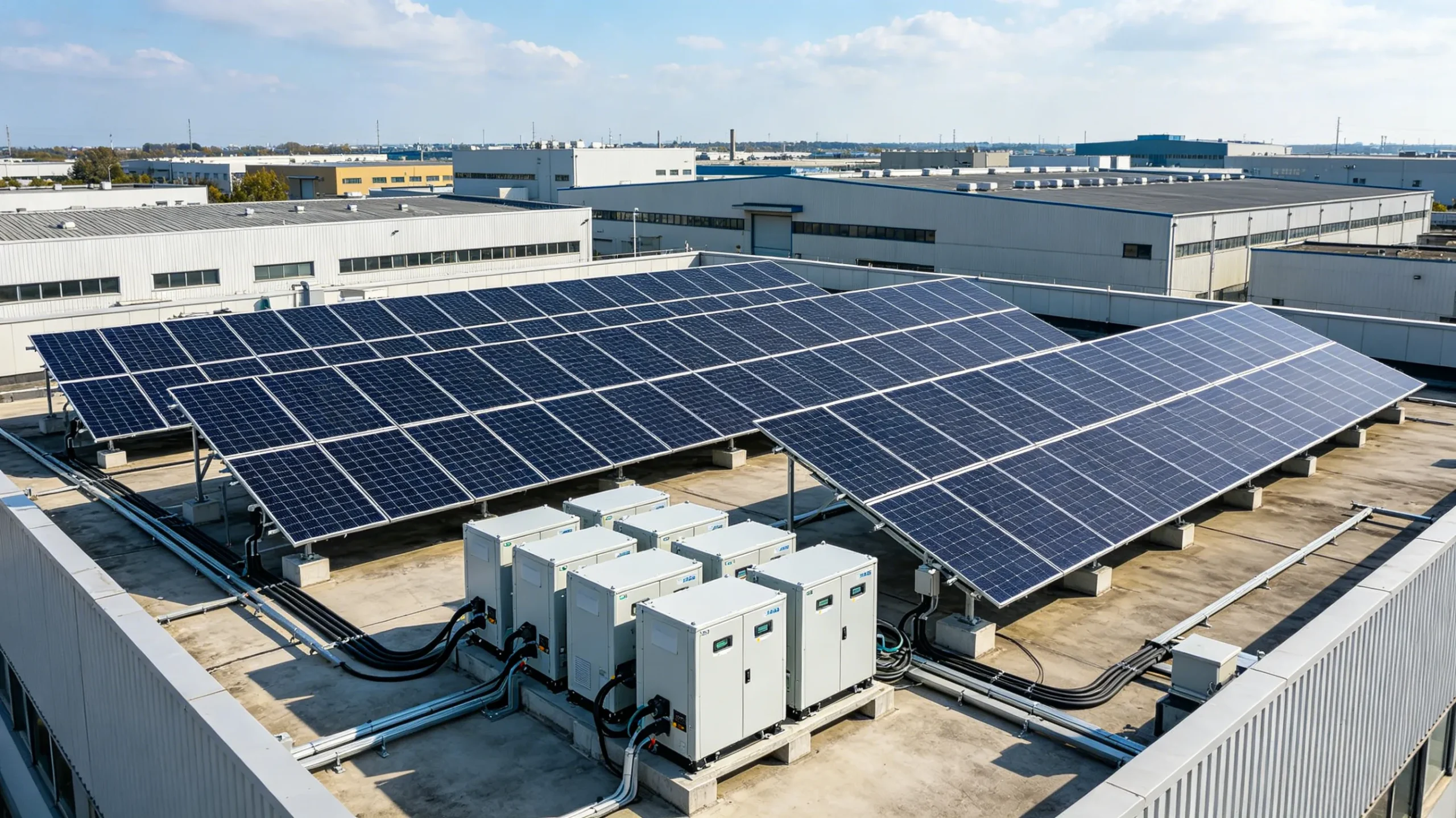
The transition from short-term backup to long-term resilience is anchored by a landmark 50 mwh longduration energy storage pilot announcement october 9 2025, which successfully achieved full grid synchronization in April 2026. This pilot, utilizing Vanadium Redox Flow Battery (VRFB) technology, demonstrates a cycle life exceeding 20,000 charges—dramatically outlasting traditional lithium-ion systems. While lithium remains dominant for 2-hour and 4-hour bursts, the Levelized Cost of Storage (LCOS) for Vanadium systems has dropped to approximately 0.16 USD per kWh for 10-hour applications. This provides a tangible solution for industrial sites and data centers that require “100-hour” reliability, as seen in the recent April 2026 agreement between Meta and Noon Energy to reserve 100 GWh of ultra-long-duration capacity.
Supply Chain Optimization: Shipping BESS from China
For global project developers, the logistics of shipping energy storage system from china remains a primary cost driver. In 2026, the supply chain has stabilized, with average sea freight costs for 40-foot high-cube containers (BESS integrated) hovering around 3,500 USD. China continues to lead in manufacturing overcapacity, which has driven pack prices down, even as global benchmark costs for other clean technologies rose. Strategic procurement is currently benefiting from Chinese export tax rebates on “Green Tech” goods, allowing system integrators to offer competitive pricing on 500 kW and 1 MW modular units. Navigating these logistics with real-time tracking and localized EPC (Engineering, Procurement, and Construction) support is now the standard for avoiding project delays in the North American and EU markets.
Grid Stability and the Long-Duration Mandate
As of April 2026, bess battery energy storage systems have officially moved from being “fast-growing additions” to the “foundational pillars” of the grid. The focus of long duration energy storage news has shifted toward adiabatic Compressed Air Energy Storage (CAES) and advanced flow chemistries. These systems provide mechanical inertia and black-start capabilities that chemical batteries struggle to deliver at scale. In South Texas, the April 2026 partnership between Base Power and GVEC to deploy 50 MW of distributed capacity highlights the trend: utilizing long-duration assets to mitigate price spikes and prevent load shedding during extreme weather events. For grid operators, the mandate is clear—long-duration storage is the only way to achieve a 24/7 carbon-free baseline.
Cost Trajectories and Investment Realities
Data from energy storage news today 2026 indicates a divergent path for storage investments. For 4-hour systems, BloombergNEF has tracked LCOE dropping to a record low of 78 USD per MWh. However, for the 8-hour to 100-hour window, the capital intensity of LDES is now being offset by its 25-year operational life and lack of degradation. Investors are increasingly moving toward hybrid portfolios: pairing low-cost lithium-ion for peak shaving with VRFB or CAES for multi-day reliability. This “Staged Storage” model solves the financial risk of battery replacement costs while meeting the stringent resource adequacy requirements set by modern regulators.
The Shift to a 24/7 Decarbonized Grid
The final piece of the 2026 energy transition is the integration of the “Living Grid.” LDES technologies are no longer speculative; they are industrial-grade infrastructure. By solving the intermittency of renewables without relying on natural gas peaker plants, LDES is enabling the first truly zero-carbon industrial zones. As we move toward the 2030 targets, the success of the current 50 MWh pilots and the stabilization of the China-to-US supply chain ensure that energy is no longer a scarce commodity, but an ambient, reliable foundation for the next generation of global industry.