The events of April 2026 have rewritten the industrial playbook. The disruption in the Strait of Hormuz exposed a critical flaw in global manufacturing: the cost of production was still too tethered to the physical movement of fossil fuels. As a result, the “Resilience Grid” has moved from an ESG goal to a core survival strategy. In 2026, the most competitive factories are those that have successfully decoupled their uptime from global geopolitical shocks.
Hybrid Storage: Balancing the 2026 High-Frequency Grid
As the primary energy mix shifts toward intermittent renewables, the industrial grid faces a new enemy: frequency instability. The response in 2026 is the Hybrid Storage System (HSS).
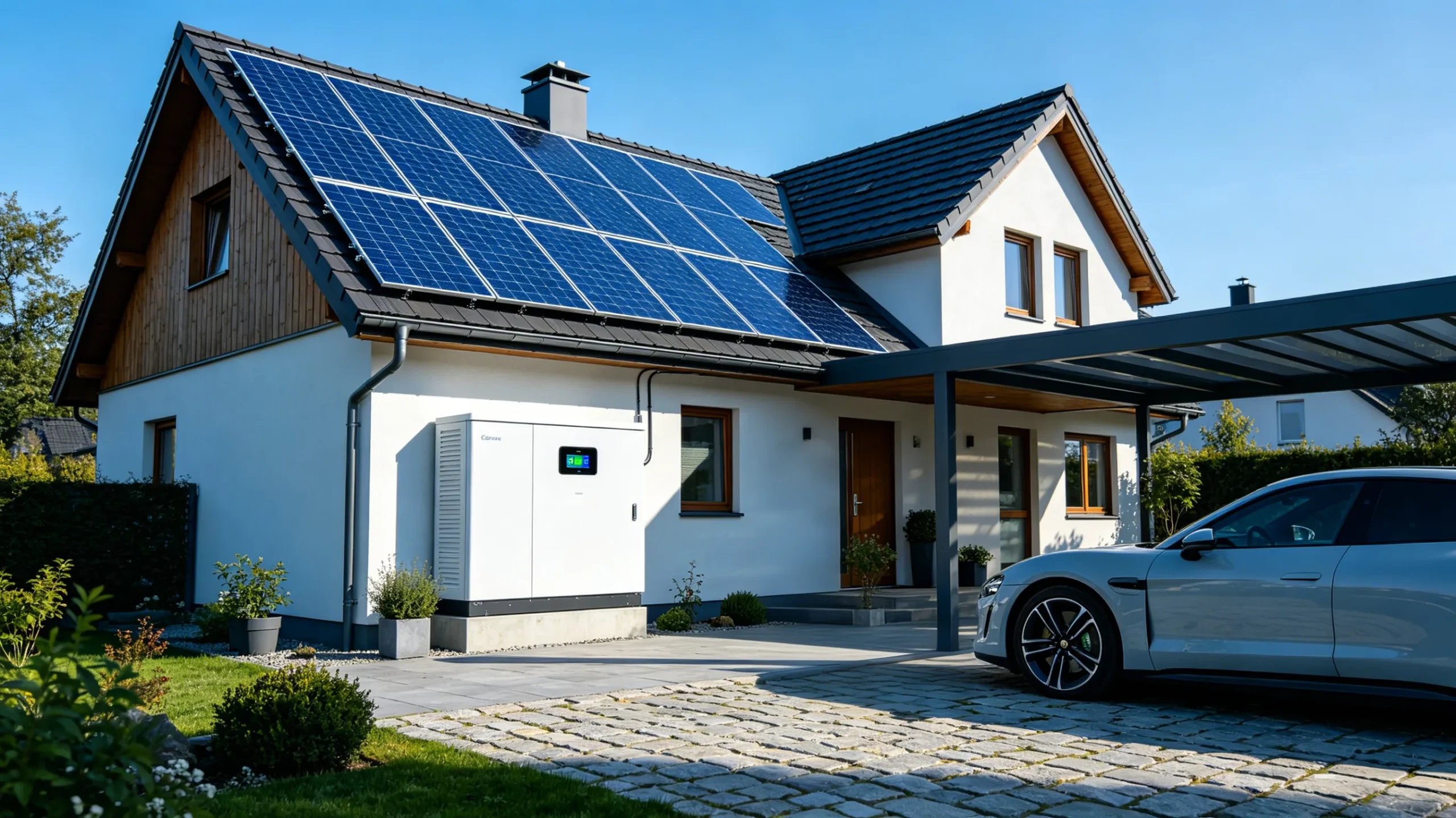
- The High-Power Mix: By pairing high-capacity Solid-State batteries (for long-duration energy) with Supercapacitors (for high-power bursts), factories can now manage both energy volume and grid quality.
- Millisecond Response: Supercapacitors provide the “shock absorber” effect needed for high-precision 2026 robotics. They respond in milliseconds to voltage dips that would otherwise trigger a total plant shutdown, ensuring that “flickers” on the public grid never reach the assembly line.
- 1,000,000 Cycle Breakthrough: These supercapacitors are now rated for over a million cycles, effectively outlasting the solar panels they support and making “maintenance-free” storage a reality.
Electrifying Heat: The Industrial Heat Pump Surge
2026 marks the “Tipping Point” where high-temperature heat becomes an electrical asset rather than a gas-fired liability.
- Phase 4 Commercialization: Industrial Heat Pumps (IHP) have moved into the mass-market phase, capable of delivering process heat up to 150°C to 200°C.
- Decarbonizing Steam: By replacing gas-fired boilers with heat pumps that operate at 300% efficiency (compared to 90% for gas), manufacturers have effectively insulated themselves from the $150/bbl crude spike.
- Economic Defense: In the April 2026 energy climate, every megawatt converted from gas to electricity via a heat pump represents a significant hedge against regional resource scarcity.
The Joule-Standard Economy: Compute-Energy Coupling
Manufacturing plants are no longer just “sinks” for power; they are active, revenue-generating nodes in the 2026 energy market.
- Asset Aggregation via Digital Twins: By 2026, every industrial asset—from HVAC systems to the warehouse battery—is mapped in a Digital Twin. This allows a factory to act as a Virtual Power Plant (VPP).
- Monetizing Flexibility: Factories now participate in “Demand-Side” auctions. By shifting heavy loads—like aluminum smelting or high-output AI training—to hours of peak solar surplus, they earn “Flexibility Credits” that often offset their entire annual energy expenditure.
AI-Driven Grid Protocols: The Autonomous Factory
In a world of frequent grid instability, the 2026 factory must be able to “think” its way through a blackout.
- Smart Transformers & Active Voltage Control: 2026 saw the widespread deployment of smart transformers that use AI to smooth out voltage spikes in real-time, protecting sensitive 2nm-process semiconductor lines and high-speed data centers.
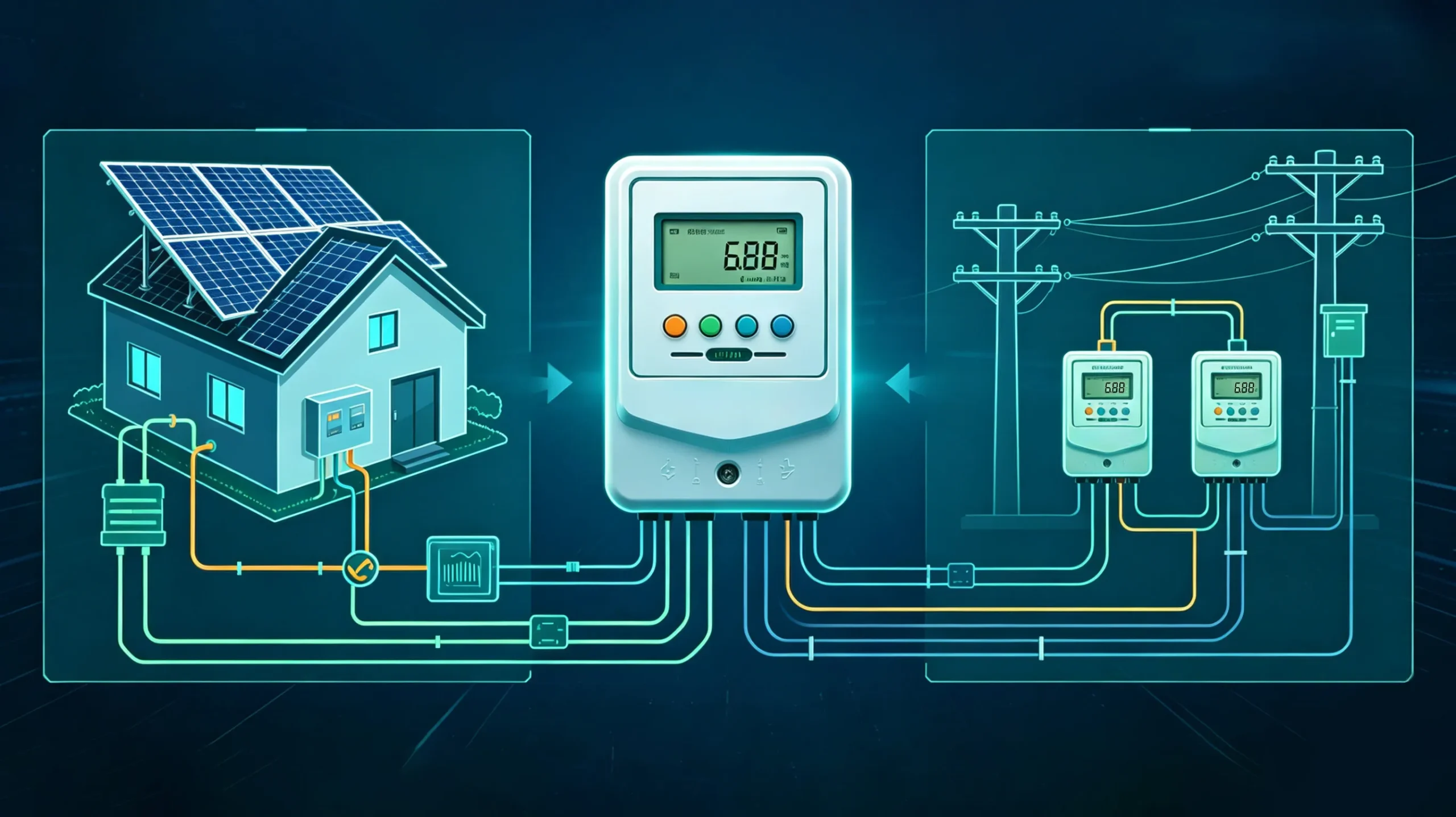
- Edge Control & Zero Feed-In: To maximize resilience, energy management has moved to the “Edge.” This ensures that if the regional internet or power grid fails, the factory’s local AI can manage a “Zero Feed-In” loop—running purely on local solar and hybrid storage until the external grid stabilizes.
Conclusion: The Blueprint for the 2027 Transition
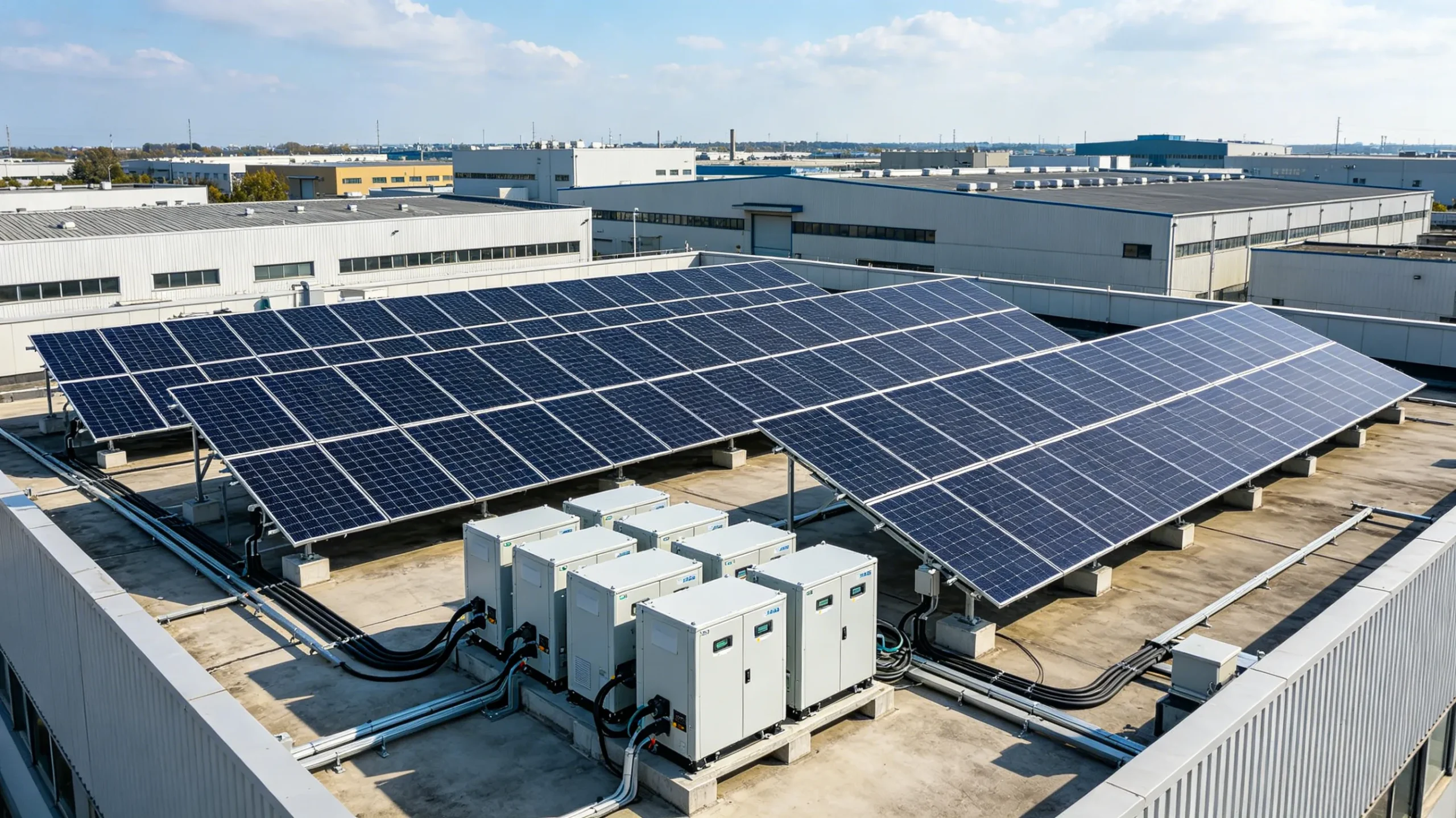
The synthesis of 2026 is clear: Energy security is a technology problem, not a resource problem. The “Resilience Grid” has proven that a factory equipped with its own generation, hybrid storage, and AI management is fundamentally more stable than one tethered to a 20th-century pipeline.
Final Thought: The investment in hybrid storage and industrial heat pumps in 2026 is the ultimate “bulletproof” wall for any supply chain. As we look toward 2027, the companies that will lead the next industrial age are those that recognized the Strait of Hormuz crisis not as a temporary hurdle, but as the signal to take total command of their own energy destiny.