In the history of the energy transition, 2026 will be remembered as the year the “training wheels” came off. With the official expiration of federal tax credits that once propped up the sector, home energy storage has been forced to graduate from a subsidized environmental statement to a cold, hard financial necessity.
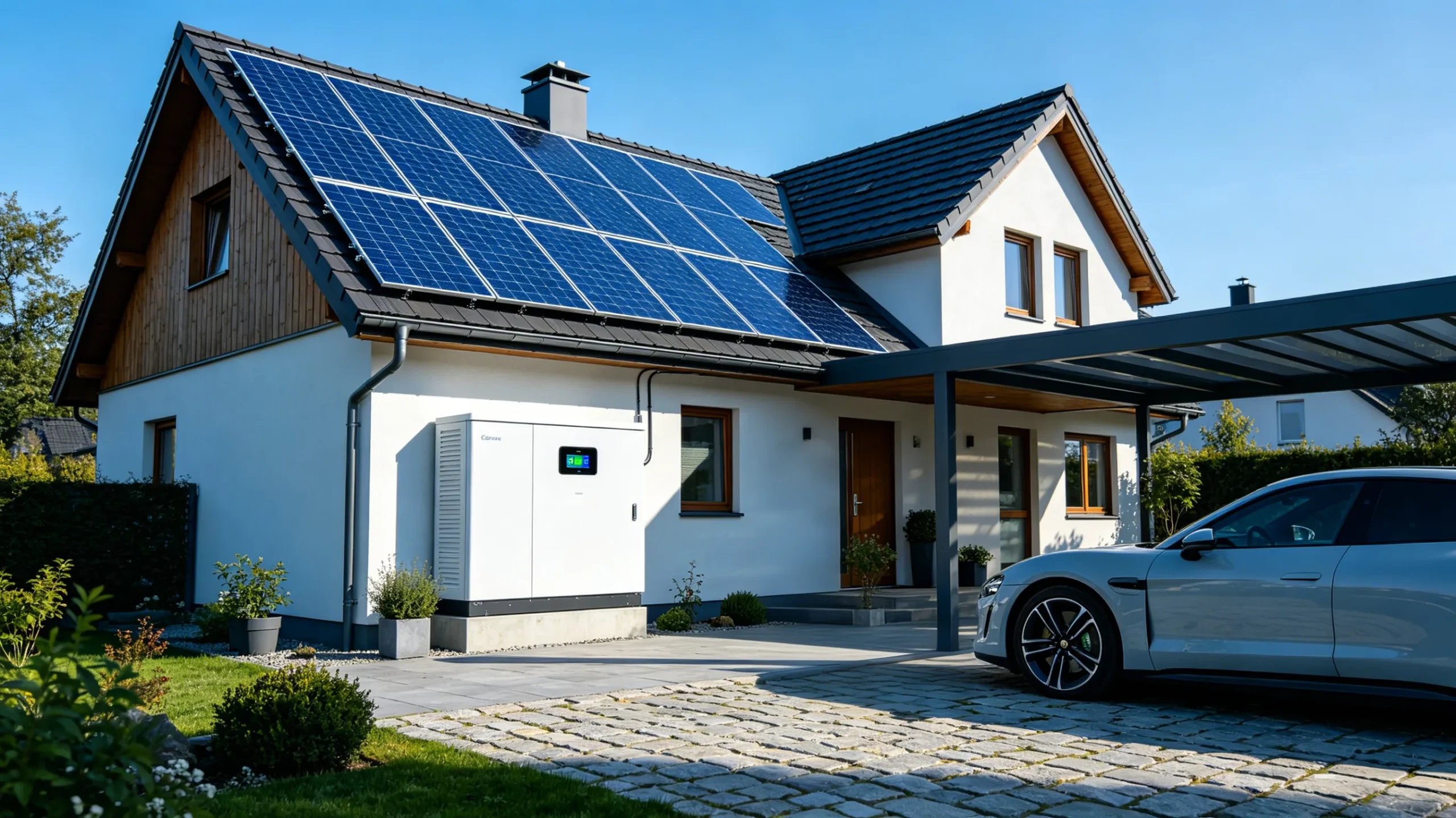
What we are witnessing is not a market contraction, but a maturation. In 2026, the home battery has finally become a standard appliance—as essential and economically justifiable as a modern HVAC system.
The 2026 Subsidy Sunset: From Policy to Product
The expiration of the Residential Clean Energy Credit at the end of 2025 sent shockwaves through the industry, but the result was a lean, hyper-competitive market.
The New Reality of ROI
Without government handouts, 2026 battery systems must win on pure performance. Homeowners are no longer buying based on rebates; they are buying based on a five-year payback period driven by soaring utility peak rates. The home battery has successfully transitioned from an “early adopter” experiment to a “mass market” financial fortress.
The Nevada Advantage: Breaking the $100/kWh Floor
The primary catalyst for this post-subsidy success is the massive localization of the supply chain.
Domestic LFP Stability
The Tesla Gigafactory in Nevada reached its 7 GWh annual LFP (Lithium Iron Phosphate) production milestone in early 2026. By manufacturing 100% of the cells on US soil, the industry has effectively neutralized the 80% tariffs on imported minerals.
The Tipping Point
Domestic scaling has pushed battery costs toward the legendary $100/kWh mark. At this price point, the economics of energy storage work for the average middle-class household regardless of political climate or federal incentives.
V2H and Battery Stacking: The Car as a Power Plant
The most significant hardware shift of 2026 is the erasure of the line between the driveway and the utility room.
The Bidirectional Standard
By April 2026, Vehicle-to-Home (V2H) technology has become a standard feature across most EV platforms, including the 2026 Model Y and Silverado EV. Your car is no longer just transport; it is a mobile 100 kWh backup generator.
Unplugged Resilience
Homeowners are now practicing “Battery Stacking,” using small, high-cycle LFP home units for daily cycling while reserving their EV’s massive capacity for multi-day grid outages. This synergy has made “grid-optional” living a reality for millions of suburban households.
Smart Sovereignty: AI and the Joule Standard
In 2026, the home energy system “thinks” in Joules, not just Dollars.
Automated Arbitrage
Smart home AI now manages energy with the precision of a high-frequency trader. These systems practice automated arbitrage—charging LFP banks when grid prices are negative or near-zero and discharging them during the 4 PM to 9 PM peak pricing window.
Virtual Power Plants (VPP)
Homeowners are increasingly turning their batteries into revenue streams. Through “Energy-as-a-Service” contracts, 2026 residential storage systems act as a collective Virtual Power Plant, supporting the grid during regional heatwaves in exchange for direct monthly payments, allowing the hardware to pay for itself.
Engineering for the 15-Year Life Cycle
The 2026 hardware generation is built for the long haul, matching the lifespan of the home itself.
The 8,000-Cycle Standard
Modern LFP chemistry has pushed durability to the 8,000-cycle mark. This means a 2026 battery system can be cycled daily for over 20 years, comfortably outlasting most mortgages and providing a “lifetime” energy solution.
Modular Scalability
The “Stackable” architecture of 2026 allows for incremental growth. Homeowners can start with a 5 kWh “Starter Block” and add modules as they add high-load appliances like heat pumps or induction ranges, ensuring their energy infrastructure grows with their needs.
Conclusion: The Grid-Optional Frontier
We have reached the historical moment where staying purely on the traditional grid is a financial liability. In 2026, the home energy storage system has proven it can stand on its own two feet. It is no longer about “going green”—it is about going independent.
Final Thought: In the post-subsidy world, the home battery is the ultimate hedge against an uncertain future. It is a financial fortress that offers both economic security and the ultimate luxury: the power to remain unplugged.